BEHAVIOUR OF DOGS
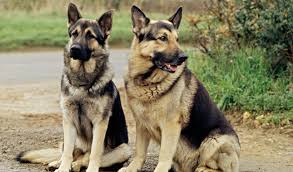
Dog behavior is the internally coordinated responses of the domestic dog to internal and external stimuli.As the oldest domesticated animal behavior of dogs has inevitably shaped by millennia of contact with humans.As a result of physical and social evolution dogs more than any other species have the ability to understand and communicate with humans and they are uniquely attuned to our behaviors.These abilites are not expressed by the dogs.
The origin of the domestic dog is not clear.Whole genome sequencing indicates that the dog,the gray wolf and the extinct Taymyr wolf diverged at around the same time.How dogs became domesticated is not clear,however the two main hypothesis are self-domestication or human domestication.Dog intelligence is the ability of the dog to perceive information and retain it as knowledge for applying to solve problems.Dogs have been shown to learn by inference.Dogs have advanced memory skills,A study documented the learning and memory capabilities of a border collie,"Chaser" who had learned the names and could associate by verbal command over 1000 words.Dogs are able to read and react human body's language and pointing,and to understand human voice commands.After undergoing training to solve a simple task,dogs that are faced with an insoluble version of the same problem look at the human,while wolves do not.Dogs demonstrate a theory of mind by engaging in deception.
Dog's senses include vision, sense of smell , taste , touch and sensitivity to the earth's magnetic field.Dog communication is about how they speak to each other, how they understand messages that human send to them and how they can translate the ideas that dogs are trying to transmit.These communication behavior include eye gaze,face expression,body posture,movements of body,movements of limbs , vocalization, and gustatory communication. Human communicate with dogs by using vocalization,body posture and hand signals.
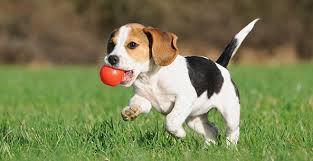
Play between dogs usually involves several behaviours that are often seen in aggressive encounters like nipping , biting and growing. it is important for the dogs to place these behaviours in the context to play rather than to aggression. Dogs signal their intent to play with a range of behaviors including a "face-paw"," play-bow " open-mouthed play face and inviting the other dog to chase the initiator. Similar signals are given throughout the play bout to maintain the context of the potentially aggressive activities.
From a young age , dogs engage in play with one another. Dogs play is made up primarily of mock fights.It is believed that this behaviour is almost common in puppies.


No comments:
Post a Comment